Think Differently
The Self You Didn't Choose
The self-help industry tells you to find yourself. But what if a significant part of who you are was assigned, conditioned and reinforced long before you were old enough to push back on it? I think the question we ask shouldn't be, "Who are you?', It should be, "Who decided.?"
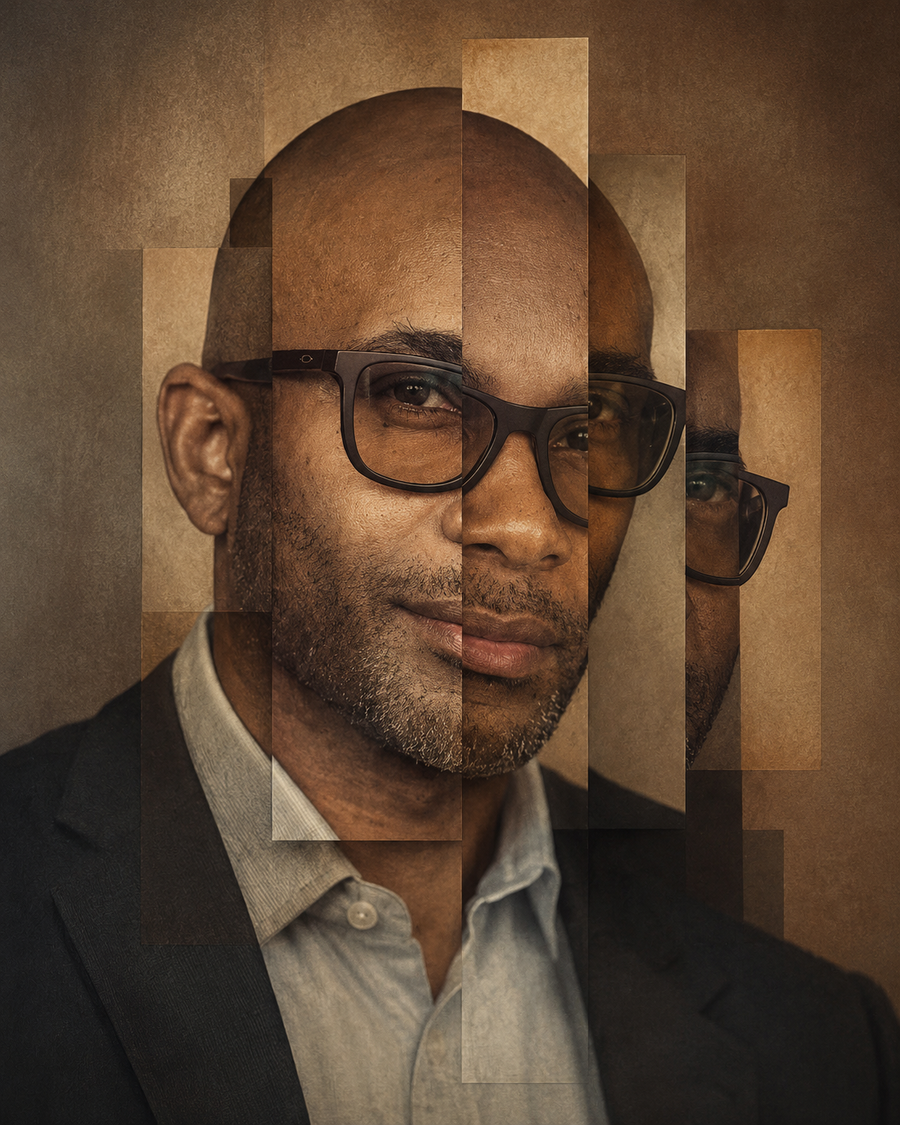
We spend an extraordinary amount of time, money and emotional energy trying to find out who we really are through therapy, retreats, journaling, personality tests and life coaches. The entire personal development industry is essentially one long answer to the same question, and few stop to ask whether the question is the right one.
"Who am I?"
The question assumes there is a fixed answer somewhere inside you. I think the more interesting question is not who you are, but who decided. There is evidence, once you look at it properly, that a significant portion of what most people call their identity was never chosen at all. It was assigned, conditioned, absorbed and reinforced, often before they were old enough to recognise it, let alone push back on any of it.
The therapeutic instinct is to help people find themselves. But are they lost, or is that simply the premise of a lucrative industry? A more useful instinct might be to help them notice how thoroughly they have already been found. The industry built around self-discovery is keeping you searching for a fixed self that was never there.
Who decided your identity? The question surfaces in different ways, depending on who is carrying it.
A teenage girl moves between friendship groups, religions and identities so quickly that people around her lose count. Goth one month, exploring her sexuality the next, leading a violent gang, then presenting as a very feminine "girly girl." From the outside it looks unstable. Look closer and it looks like someone searching desperately for somewhere to belong.
A young man gravitates towards peers whose identity centres on crime and antisocial behaviour. Over time those behaviours become normalised, then expected, then part of how he sees himself, a "rude boy" and a victim of a racist system. What began as belonging to a group gradually becomes his identity.
A married man in his forties cannot work out why every argument with his wife leaves him feeling like he is fighting for his life rather than discussing the bins or the school run. He built his sense of self around being the provider, the strong one, the man who has it together. When his wife pushes back, even gently, it registers as an attack on who he is. Strip away the age and the marriage, and the same pattern as the teenagers sits underneath it. He is defending an identity he stopped questioning decades earlier.
Does identity only get built in adolescence, or does the same foundation get tested and rebuilt right through adult life? And if identity is built rather than born, who actually gets to decide what gets built? Biology, family, culture, community and personal choice have been shaping your identity simultaneously, often in contradictory directions, for your entire life, and not one of them asked your permission.
Thinkers across centuries and continents have tried to work out which force is really in charge. Let's start with Erik Erikson.
Erik Erikson and the Search for Identity
Erikson was a psychoanalyst, born in Germany to Danish parents, and raised with uncertainty about his biological father. He was forced to leave Europe for the United States in 1933, spending much of his adult life without a settled sense of where he belonged. That experience fed directly into a theory that still shapes how psychologists think about human development.
Erikson proposed eight stages across the lifespan of an average person, each built around a central tension to be resolved. The first four move through infancy and childhood, covering trust versus mistrust, autonomy versus shame and doubt, initiative versus guilt, and industry versus inferiority. The fifth, arriving in adolescence, is the hinge point of the whole model, identity versus role confusion. The three that follow carry the same structure into adulthood and later life, from intimacy versus isolation and generativity versus stagnation through to ego integrity versus despair.
A young person at the fifth stage pulls together family values, skills and feedback from friendships into something coherent, trying on different roles before settling into ones that fit. Succeed, and you develop fidelity, the capacity to commit to people and values even when tested. Fail, and you are left with role confusion, a fragmented sense of self that can resurface as instability well into adulthood.
Erikson gave the broad framework, and James Marcia later in the 1960s made identity development more measurable by focusing on exploration and commitment. He described four identity statuses, moving from diffusion, where a person neither explores nor commits, through foreclosure, where they commit without exploring, and moratorium, where they explore without yet committing, to identity achievement, where they have done both properly. These statuses can change over time, so people may move back and forth among them across life, especially after major transitions.
Marcia's framework can be mapped directly onto all three people mentioned at the start. The young woman is in moratorium, a teenager exploring identities in a society that had made room for very few of them, trying each one until it wore thin. The young man is in foreclosure, commitment made early and untested, in a context where the wider system had already cast him as a suspect before he settled into an identity that, in his eyes, simply matched how he was already being treated. The man in his forties is foreclosure taken to its logical conclusion, a commitment to "provider" made so early it was never revisited, until his marriage forced the moratorium he had avoided the first time round.
None of this says the choice was made for them. It says the conditions narrowed what felt available to choose from. Erikson and Marcia locate identity as an internal project, something developed from within. B.F. Skinner breaks from that entirely.
B.F. Skinner and Identity as Conditioning
Skinner argued the only things worth studying were observable behaviours and the consequences that shaped them. Behaviour rewarded becomes more likely to recur. Behaviour punished becomes less likely. Reinforced consistently enough, it stops feeling like something you do and starts feeling like who you are.
What Skinner cannot account for is choice. The pattern can be noticed. It can be stepped outside of. That is where Carl Rogers picks up.
Carl Rogers and the Authentic Self
Rogers believed every person has an authentic self, and that the task is to stop other people's expectations from burying it. Children who are loved unconditionally grow up free to explore who they are. When love arrives with conditions attached, they learn quickly which parts of themselves earn approval and which must be hidden. They do not lose themselves all at once. They edit, repeatedly, until the edited version feels like the original.
Both the young woman's constant reinvention and the young man's drift toward a criminal identity were searches for somewhere the self could exist without having to earn its right to stay.
Rogers assumes there is an authentic self waiting to be uncovered. Buddhist philosophy questions whether that was ever true.
Buddhism and the Self That Was Never Fixed
Buddhism offers an uncomfortable answer to the question of who you really are. I do believe the question is misleading. There is no fixed self underneath the noise. What we call "me" is a constantly shifting bundle of sensations, thoughts and perceptions, moving like a river. Never quite the same water twice, yet appearing continuous from the outside. The suffering comes from treating something fluid as though it were solid.
This reframes the problem entirely. The young man clinging to "rude boy" was not expressing a true self. He was maintaining a story handed to him by a system, and the young woman was constructing one, moment to moment, as we all do.
If there is no fixed self to defend, there is no fixed self trapping you either. Buddhism dissolves the self inward, finding nothing fixed. Ubuntu dissolves it outward.
Ubuntu and the Self We Share
Ubuntu is an African philosophical tradition with deep roots across Bantu-speaking communities. It’s central idea is usually translated as "I am because we are."
Archbishop Desmond Tutu described a person with Ubuntu as someone secure enough in belonging to a greater whole that they are diminished whenever someone else is humiliated, and enlarged whenever someone else flourishes. Where Descartes built his philosophy on "I think, therefore I am," grounding existence in individual thought, Ubuntu grounds personhood in relationships and community.
I am a living example of this. I am a man, a family man, heterosexual, English, Bajan and African. I am intelligent, witty and sensitive. I hold all of these simultaneously, and not one of them cancels another out. My English upbringing shaped how I think and how I move through the world. My Bajan heritage shaped where I come from and what home feels like. My African roots reach further back still, into something deeper than geography. My identity as a father and a husband sits alongside my identity as an individual. My sensitivity and my strength do not contradict each other. They belong to the same person.
My self is not diminished by multiplicity, it is built by it. I am not one thing despite being many things. I am more fully myself because of all of them together. Each relationship, each community, each heritage has shaped me, not by pulling me in different directions, but by making me more complete.
This is what the young woman was looking for, and what the system kept withholding. The same is true of the young man, whose search for belonging led somewhere narrower and more costly, shaped by a system that had already decided how to see him before he had done anything to earn the label. Neither lacked the capacity to build a stronger identity, they lacked a community open enough to let them carry all of themselves into the room.
Several views, spanning continents and centuries, each one illuminating a different face of the same question. Together, they point toward something practical.
Identity as Something You Practise
So I maintain that the self-help industry has the sequence backwards. It tells you to find yourself first, then act accordingly. However, I think there is sufficient evidence to suggest the opposite is more effective. You act first, and then the self follows. It is not a motivational sentiment, it is a mechanical one.
Identity is not what you declare and what you repeatedly do. Every thought, decision and habit, every promise kept or broken, every person you spend time with, every standard you tolerate in yourself and in others, each one either strengthens or weakens the story you carry about who you are. The behaviour correlates with the belief, and in many circumstances caused by it. Remember beliefs can change, therefore changing behaviours.
Aristotle is commonly paraphrased as saying we are what we repeatedly do. What most people miss is the implication. You do not need to feel like a different person before you start acting like one. You need to act like one, consistently enough, and wait. Do ‘it’, over and over, until doing it stops feeling like a choice and starts feeling like who you are.
Who Are You Becoming?
All views land from different angles. Erikson and Marcia see each attempting the same developmental task with fewer real alternatives than they deserved. Skinner sees environments that did the shaping before any conscious choice was made. Rogers sees people searching for somewhere their authentic self exists without conditions. Buddhism sees clinging to identities that were never fixed in the first place. Ubuntu asks whether the community around each person was strong enough to hold them.
If you recognise yourself in any of these stories, what follows is a set of honest starting points.
If you are the young woman, still moving between identities and looking for the one that finally fits, notice first what you are actually searching for underneath the switching. In almost every case it is unconditional belonging, a place where you do not have to earn your right to stay. That need is real and is also visible. And belonging that arrives suddenly, completely and without conditions is almost always being offered at a price that has not yet been named.
The people most practised at providing exactly what a searching person needs, the feeling of being seen, chosen, understood and wanted, are not always the people who deserve to be trusted with that need. Predators, romantic and sexual, are skilled readers of vulnerability. Be very careful because they offer something real, but at a cost that only becomes clear once you are already inside it.
Build belonging deliberately rather than finding it accidentally, grounded in friendship and community before intimacy, starting with one relationship, one practice, one space that asks nothing of you except your presence. The searching itself is the genuine work of building an identity in a world that gave you few stable places to stand. Every search needs somewhere to land. Make sure that place is chosen, and not stumbled into.
If you are the young man, whose identity was formed early and reinforced by environment until it feels like simply who you are, the question is whether you are willing to change the conditions first. Identity follows the environment more than it leads it, and sustained exposure to different expectations, different reinforcement and different relationships produces a different identity over time.
If you are the married man, defending a position you cannot quite name and finding that every argument feels larger than it should, the reckoning your wife is forcing may be the moratorium you skipped the first time round. The identity you built as provider, as the strong one, as the man who has it together, was built for circumstances that may no longer exist in the same form. It is not an attack on who you are. It is an invitation to find out who you have become, and who you want to be next. You do not have to wait for a crisis to trigger this. You can choose to begin it deliberately, one honest conversation at a time.
I write this as someone who has had to learn that holding multiple identities is not a problem to solve. It is a strength to claim. The English in me and the Bajan in me and the African in me do not compete. The family man and the individual do not compete. The man who thinks carefully and the man who laughs quickly are the same man. None of it had to be chosen over the rest. And if you carry your own version of this, your own multiple inheritances, communities and selves, neither should yours.
Our past influences us without imprisoning us. Every conversation, relationship, habit and decision either strengthens or reshapes the identity we carry forward.
The question should be who you are becoming, because the identity you practise today has a way of becoming the life you are living tomorrow.
Share this essay