Live Better
Small Victories
I finally had the operation. What happened next taught me more about progress, healing, and gratitude than I expected.
Three days ago, on Tuesday, I finally had the operation.
After weeks of waiting, cancellations, uncertainty, and daily blood-thinning injections, I was prepped, briefed, signed the waivers and wheeled into theatre.
Surgery
The team asked my name and date of birth. Then again. Then again. They marked my thigh with an arrow pointing towards the area to be treated. All necessary precautions.
The theatre room surprised me. Much smaller than I expected, and more crowded. Storage along one side, gases, equipment, every accessory needed for what was about to happen, and above it all, that huge umbrella light, hanging over the table.
There was no time to take it all in. The team was working on me within sixty seconds of me entering the room.
The anaesthetist and surgeon asked me random questions about my work. The coherence and consciousness test. Not interest.
My arm started to feel cold from the inside as the saline and other magic juice flowed in from the cannula. What a strange sensation, as the cold crept slowly upward.
Accept it and breathe, I told myself. This is the path to recovery.
The face mask was held firmly in place. Deep breaths. General anaesthetic, I think.
The room slowly started spinning, and before I knew it — I was out.
They began the surgery, a milestone and cornerstone event in the story.
My leg had been opened up from both sides so that the plate, more of a bar, could be placed over the break in the fibula, fixed by two screws, with bands to hold the tibia and fibula together.
It's called syndesmosis fixation.
The procedure had been explained in the digital consent and explanatory documents sent to my phone that morning. I'm glad I kept it on. I'm glad I had reception. The surgery was only ninety minutes or so, short compared to what others go through.
I woke up on the ward with zero memory of anything after the questions about my work.
My wife was there, stroking my head as I opened my eyes. My throat was very sore, likely from the breathing apparatus used while I was under the general anaesthetic. I smiled, and gratitude flooded my being.
I glanced at my leg and tried to move my toes.
Nothing. No movement. My mind said move, but my toes disobeyed.
Part of the process, I told myself. The anaesthetic and nerve blocker are still working. They need to wear off.
The rest of that day the grogginess slowly and surely wore off.
It was a sweltering day. I had to untie the bow holding my gown on. The ward had no air conditioning and no fans available. Just relentless heat, draining and inescapable. I found myself thinking about the elderly and the babies in the hospital, hoping that they had better facilities. I got through the night.
Day After
The day after surgery, the doctor came through to check on me and explain what had been done. I saw the before and after X-rays.
There it was on the screen, my own ankle with the plate, screws, fixings. I stared at it for longer than I expected to. Something between awe and disbelief. The idea that while I was unconscious, a surgeon had opened my ankle, repositioned bone, and bolted it back together with hardware I could now see with my own eyes.
Strange. Humbling. And oddly, deeply reassuring.
The plate and screws are part of me now, they are like scaffolding around a damaged building holding everything in the right place while the builders work.
My body is the builder.
Wednesday and Thursday were difficult.
The pain was different, sharper than before the surgery. It arrived in unpredictable waves which stabbed at different areas up and down my leg.
I have to manage this.
The choice I had was to take the stronger medication given and ease the pain but accept the side effects: constipation, nausea, dizziness, or take the pain.
I made a choice. Imperfect medication over perfect pain. A workable compromise rather than a perfect solution. Come on, I can take this, it wont be forever.
Yesterday brought another lesson because my blood pressure was low. The physiotherapist visited and confirmed it.
Sitting upright made me dizzy. Standing required concentration increased dizziness and lowered the bloodpressure.
I cannot lie flat forever, my recovery requires movement. I need to sit up to eat, to drink, to work, to live.
The temptation for me is to push through, to grit my teeth and prove I'm tougher than the problem as it presented itself. That would typically be my way. But I'm not David Goggins and I don't need to be a hero. I need to take my time, listen to my body, and allow it to do what it was designed to do.
A little light
Thursday night was noticeably better. Thank you. Thank you. Less pain, less discomfort.
I had a longer sleep with fewer wake-ups. Progress, but I am not celebrating yet.
And, this morning brought additional relief.
The pain has subsided significantly but it's still there. I'm still uncomfortable. But for the first time since the operation, it feels manageable rather than overwhelming.
For the first time, I can see a little further ahead than the next dose of medication.
I feel genuine hope and that feeling surprised me.
The difference between severe pain and moderate pain is not just physical. It's psychological. When pain dominates your attention, the world becomes very small. When it eases, possibility returns.
I also need to drink more water, which may help with the blood pressure, but I seem to be urinating more than I am drinking. Whether that's the medication, the heat, the recovery process, or all three, I am not sure. Just drink more, 3 litres. Just do it.
The more I reflect on this experience, the more I realise recovery, like many successes in life, is built on small decisions.
Drink the water. Take the medication. Elevate the leg. Do the exercises. Rest when needed. Move when appropriate. Trust the process.
None of these actions feel heroic. None create dramatic stories, yet these are the things that create healing.
There is probably a wider lesson in that.
We often celebrate breakthroughs, the promotion, the successful business and the finish line. But real progress is usually happening long before anyone sees it, as it is in the routines, and the quiet decisions made day after day.
My body is reminding me of that right now. Beneath the swelling, bruising, stitches, metalwork, and discomfort, millions of tiny processes are happening every second: Repair. Adaptation. Recovery.
A wonderful machine doing exactly what it was designed to do, and today I am deeply aware and grateful for that.
I want to say something about the nursing staff, because they deserve to be said.
Through the night, after the operation they were there. Checking, caring, tending, emptying, reassuring. Quietly doing what needed to be done without complaint, without fanfare, and despite conditions and pay that fall well short of what they deserve.
They are not thanked or paid enough. They are not recognised enough.
Some are certainly reincarnated angels. I am genuinely grateful to them. My wife is one of them also, doing more for me than any other.
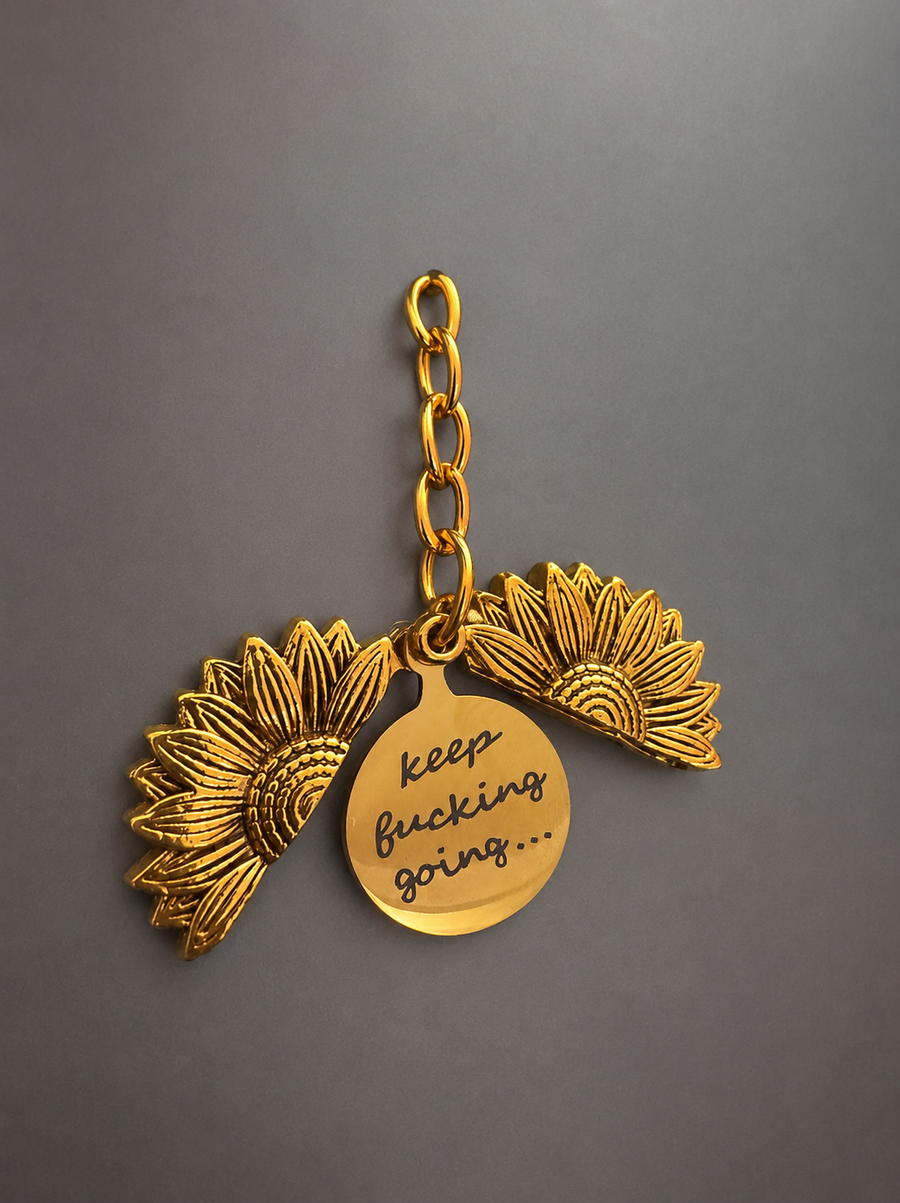
‘Keep fucking going’. Three words, engraved on a gold disc, brought by a friend who knew exactly what I needed to hear. I smiled. It said everything.
Reflection
My progress isn't measured by how far I've travelled, it's measured by the step I am actually on. Sleeping a little better, sitting up a little straighter, drinking the right amount of water, and having a little less pain than yesterday is progress.
One step at a time, then the next, not skipping the process.
These are the small victories I am going for. And right now, they are more than enough.
Share this essay